Driven by the advancements in technology, the scope of pursuing a Master of Science (MS) in robotics is expanding rapidly. As the world moves towards a new era of intelligent machines, robotics is transforming how people live, work, manufacture, heal, and explore. Automating complex or repetitive tasks reduces human errors and fosters innovation. Pursuing an MS in robotics in Germany is one of the most popular options among students, given the country’s strong engineering tradition and the lucrative job opportunities it has to offer.
Key highlights:
- What is an MS in Robotics?
- Why Pursue an MS in Robotics in Germany?
- Top Universities in Germany for MS in Robotics
- Eligibility and Admission Process
- Eligibility Criteria
- Admission Process for an MS in Robotics in Germany
- Cost of Pursuing MS in Robotics in Germany
- Tuition Fees for an MS in Robotics in Germany
- Cost of Living in Germany for International Students
- Career and Salary Scope After an MS in Robotics in Germany
- 3 Highest Paying Job Roles after an MS in Robotics in Germany

What is an MS in Robotics?
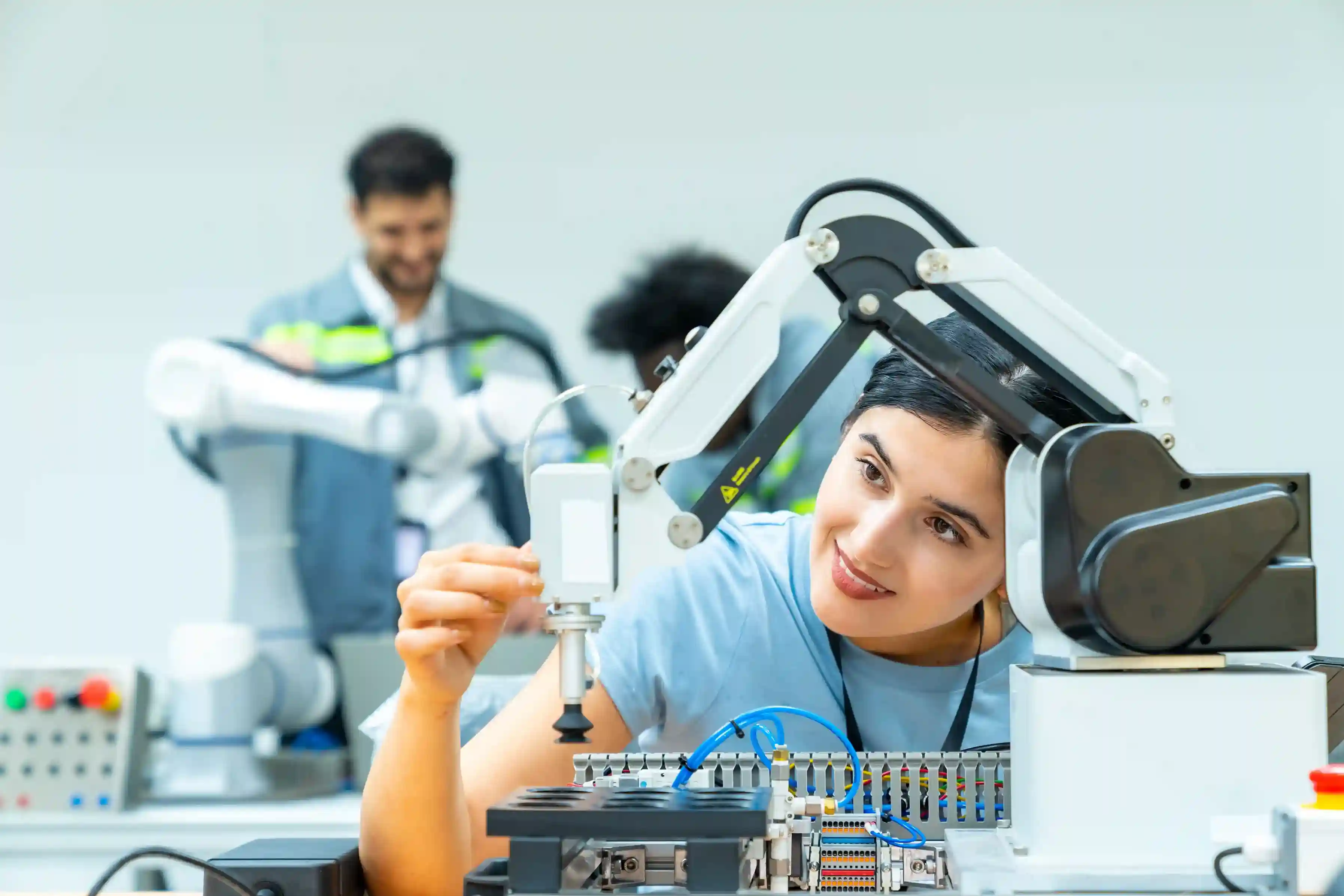
An MS in robotics is usually a 1 to 2-year master’s course. Through this programme, students learn how to understand, design, and build intelligent, flexible, and networked mechatronic and robotic systems that drive innovation across varied industries. An MS in robotics generally has a strong interdisciplinary focus and covers combined concepts of electrical engineering, mechanical engineering, and computer engineering.
Why Pursue an MS in Robotics in Germany?
- World-Class Education: German universities offer top-notch education that blends advanced research and real-world industrial applications in an economy that is considered to be one of the most automated in the world today.
- Top Universities for Pursuing MS in Robotics: Several German universities that offer master’s courses in robotics feature prominently in the QS World University Rankings and Times Higher Education World University Rankings.
- Strong Industry Collaboration: German universities work in close partnership with leading tech companies, offering students access to real-world projects, exposure to industry challenges, and excellent internship and job opportunities.
- Government Support: The German government strongly supports robotics and artificial intelligence research through multiple initiatives, including the High-Tech Strategy.
- Global Recognition: Universities in Germany are renowned all over the world and offer globally recognised degrees.
Top Universities in Germany for MS in Robotics
| University | Courses Offered |
|---|---|
| Technical University of Munich | Master of Science in Robotics, Cognition, Intelligence Master of Science in Robotic Systems Engineering and Mechatronics |
| RWTH Aachen University | Master of Science in Robotic Systems Engineering Master of Science in Construction and Robotics |
| Leibniz Universität Hannover | Master of Science in AI-Driven Mechatronics and Robotics |
| Technische Universität Dortmund | Master of Science in Automation and Robotics |
| Karlsruhe University of Applied Science | Master of Science in Robotics and Artificial Intelligence in Production |
| Universität Stuttgart | Master of Science in Autonomous Systems |
Eligibility and Admission Process
Eligibility Criteria
- Bachelor of science degree or equivalent in computer science or related fields (mathematics, physics, mechanical engineering, or electrical engineering).
- Excellent knowledge of computer science.
- Strong knowledge of Maths, especially linear algebra and analysis.
- Programming competencies.
- English language proficiency scores in exams, like the Test of English as a Foreign Language (TOEFL), the International English Language Testing System (IELTS), or the Pearson Test of English (PTE), as required by the university.
- Score higher than the minimum requirements for the Graduate Record Examinations (GRE), as required by the university.
Admission Process for an MS in Robotics in Germany
- Explore the courses and specialisations available to choose the right MS programme in robotics aligned to your academic background and career goals.
- Confirm your eligibility by going through the admission requirements at different universities.
- Gather all required documents, including an updated CV, letters of recommendation (LORs), and Statement of Purpose (SOP).
- Visit the university’s admissions portal, fill the admission form, and submit your application with all required documents.
- Once admission decisions are released, accepted students will receive admission letters.
- Explore your options and buy a suitable health insurance plan.
- Apply for a German student visa.
Cost of Pursuing MS in Robotics in Germany
Tuition Fees for an MS in Robotics in Germany
| S. No. | University | Course | Tuition Fees(Per Semester) |
|---|---|---|---|
| 1 | Technical University of Munich | Master of Science in Robotics, Cognition, Intelligence | EUR 6,000 |
| 2 | RWTH Aachen University | Master of Science in Robotic Systems Engineering | EUR 6,000 |
| 3 | Karlsruhe University of Applied Sciences | Master of Science in Robotics and Artificial Intelligence in Production | EUR 1,500 |
| 4 | Universität Stuttgart | Master of Science in Autonomous Systems | EUR 1,500 |
Cost of Living in Germany for International Students
| Expense Category | Estimated Monthly Expense |
|---|---|
| Accommodation (One-Bedroom) | EUR 714 to EUR 1,252 |
| Food | EUR 250 to EUR 450 |
| Utilities | EUR 212 to EUR 519 |
| Transportation | EUR 52 to EUR 74 |
| Mobile and Internet | EUR 48 to EUR 95 |
| Entertainment and Leisure | EUR 50 to EUR 110 |
| Health Insurance | EUR 80 to EUR 130 |
Also Read: Germany Study Visa Process: A Guide for 2025
Career and Salary Scope After an MS in Robotics in Germany
The job market in Germany is known for its competitive compensation, stability, and high demands for skilled professionals. The country is one of the leading destinations in Europe for students who want to pursue an MS in robotics at the central hub of global automation and innovation. Germany brings together cutting-edge research and real-world industrial applications and is one of the most robot-driven economies in the world. The country not only has a strong robotics infrastructure but also offers outstanding career prospects as it deploys around 28,000 new industrial robots every year, leading to rising demands for robotics engineers.
The impact of robotics can be felt across multiple domains and innovations in fields, like autonomous systems, artificial intelligence (AI), and machine learning (ML) are further driving this demand, creating new avenues for professional growth.
3 Highest Paying Job Roles after an MS in Robotics in Germany
| Job Role | Average Annual Salary(Approximation Based on Experience) |
|---|---|
| Robotics Engineer (AI/ML Specialisation) | EUR 4,100 to EUR 6,000 |
| Robotic Process Automation Developer | EUR 3,800 to EUR 8,800 |
| Robotics Ethics Consultant | EUR 8,300 to EUR 31,500 |
Looking for a study loan? With Avanse Financial Services, you don’t need to worry about the financial aspect of pursuing an MS in robotics in Germany. At Avanse Financial Services, you can avail 100% financing, flexible repayment options, quick sanctions and a customised student loan.
Obtaining an education loan to study abroad is one of the simplest ways of financing your academic dreams. If you have any questions about student loans, education loan interest rate, or your academic journey. Please connect with us. We will be glad to assist you.