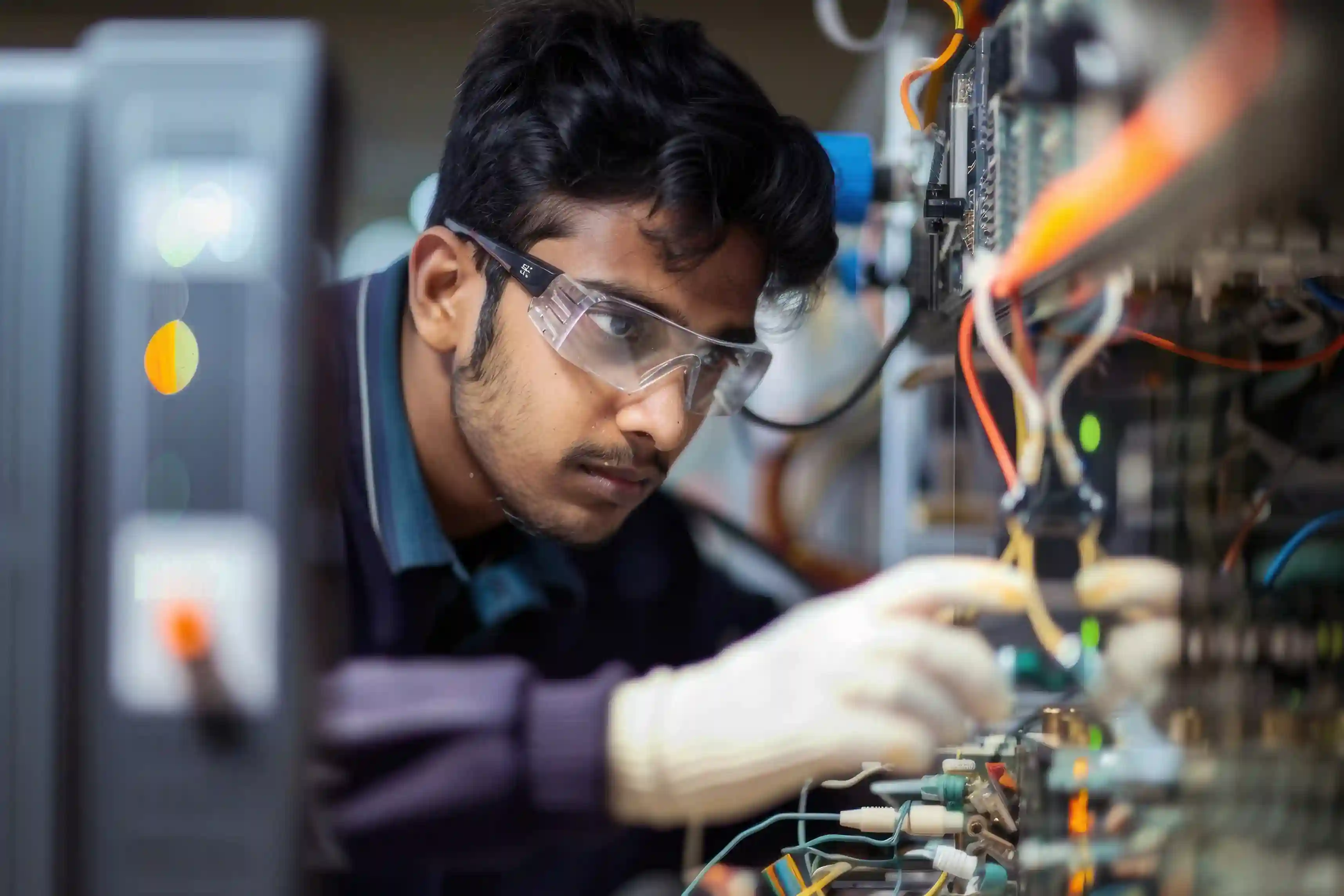
Germany has become one of the most attractive destinations for students planning to study engineering, due to its world-class education, industry-focused curriculum, and globally recognised universities. In addition to academic excellence, students planning to study engineering in Germany are exposed to many public institutions offering programmes at minimal tuition fees. This makes pursuing engineering in Germany a practical choice for aspiring engineers looking to balance quality and cost.
Key highlights:
- Why Study Engineering in Germany
- Top Engineering Colleges in Germany
- Cost of Engineering in Germany for International Students
- Cost of Living in Germany
- Career Scope after Engineering in Germany

Why Study Engineering in Germany?
World-class universities
German universities are known for their strong focus on research and innovation. These universities offer a well-structured curriculum that is accessible to English-speaking students. The teaching approach combines theoretical knowledge with practical learning, helping students build skills that are relevant to global industry requirements.
Low or minimal tuition fees
One of the biggest advantages of studying engineering in Germany is the relatively low cost of education at public universities. Most public engineering colleges in Germany do not charge tuition fees, and students are only required to pay a nominal semester fee.
Strong industry connections
Germany has a well-established industrial base and is home to numerous global companies, including BMW, Siemens, and Bosch. Many universities maintain close ties with them, offering students opportunities for internships, research projects, and practical training. This industry exposure ensures that students pursuing engineering gain hands-on experience alongside academic learning.
A range of specialisations
German universities offer a range of specialisations across disciplines such as mechanical, automotive, civil, electrical, and computer science engineering. The availability of specialised courses aligned with current industry demands allows students to choose a field that resonates with their interests.
Top Engineering Colleges in Germany
Technical University of Munich (TUM)
The Technical University of Munich is one of Germany’s highest-ranked public universities, particularly known for engineering and technology programmes. Giants like BMW, Siemens, and Airbus are known to recruit students from TUM.
| Location | Munich |
|---|---|
| Popular Courses | Mechanical Engineering, Electrical Engineering, Computer Science, and Aerospace Engineering |
| Average Fees |
|
| Quacquarelli Symonds (QS) World University Rankings by Subject 2025(Germany-Specific) | 1 |
| Times Higher Education (THE) World University Rankings by Subject 2025(Germany-Specific) | 1 |
RWTH Aachen University
Rheinisch-Westfälische Technische Hochschule Aachen (RWTH Aachen) is one of Europe’s leading public technical universities, renowned for its strong reputation in mechanical and industrial engineering.
| Location | Aachen |
|---|---|
| Popular Courses | Computer Science, Data Science, Materials Engineering, Automotive Engineering |
| Average Fees |
|
| Quacquarelli Symonds (QS) World University Rankings by Subject 2025(Germany-Specific) | 4 |
| Times Higher Education (THE) World University Rankings by Subject 2025(Germany-Specific) | 2 |
Karlsruhe Institute of Technology (KIT)
KIT is a prominent public research university for courses in engineering and natural sciences, with a strong emphasis on innovation.
| Location | Karlsruhe |
|---|---|
| Popular Courses | Electrical Engineering, Mechatronics and Information Technology, Computer Science |
| Average Fees |
|
| Quacquarelli Symonds (QS) World University Rankings by Subject 2025(Germany-Specific) | 3 |
| Times Higher Education (THE) World University Rankings by Subject 2025(Germany-Specific) | 3 |
Technische Universität Berlin
Technische Universität Berlin is a popular choice among international students for engineering and technology programmes.
| Parameter | Details |
|---|---|
| Location | Berlin |
| Popular Courses | Computer Science, Information Systems, Artificial Intelligence, Electrical Engineering |
| Average Fees |
|
| Quacquarelli Symonds (QS) World University Rankings by Subject 2025(Germany-Specific) | 2 |
| Times Higher Education (THE) World University Rankings by Subject 2025(Germany-Specific) | 4 |
Technische Universität Dresden
Also known as Dresden University of Technology, the Technische Universität Dresden (TU Dresden) is among the largest public universities in Germany, renowned for courses in computer science, information technology, microelectronics, and materials science.
| Location | Dresden |
|---|---|
| Popular Courses | Computer Science, Applied Artificial Intelligence, Bioengineering, Civil Engineering |
| Average Fees |
|
| Quacquarelli Symonds (QS) World University Rankings by Subject 2025(Germany-Specific) | 5 |
| Times Higher Education (THE) World University Rankings by Subject 2025(Germany-Specific) | 5 |
Cost of Engineering in Germany for International Students
The cost to study engineering in Germany is one of the key factors that attracts students from other countries. At most public universities, students are not required to pay tuition fees. Instead, they need to pay a semester contribution, which may vary according to each university and course. This makes pursuing engineering in Germany affordable and accessible.
Cost of Living in Germany
While tuition fees to study engineering in Germany are relatively low, students must also plan their day-to-day expenses. The cost of living may differ depending on the city, lifestyle, and type of accommodation students choose.
On average, international students spend between €900 and €1,200 per month. Major cities like Munich and Berlin tend to be more expensive, while smaller cities such as Aachen or Karlsruhe are comparatively cost-effective.
| Expense Category | Single Student (Estimated) |
|---|---|
| Rent | €450 – €650 (Shared Room/WG) |
| Food & Groceries | €200 – €250 |
| Health Insurance | €125 |
| Transport | Included in Semester Fee (or €30) |
| Internet & Mobile | €15 – €20 |
| Leisure & Misc. | €100 – €150 |
| Total Monthly Cost | €920 – €1,225 |
Career Scope After Engineering in Germany
Germany has a strong industrial base and a consistent demand for skilled engineering professionals, making it an attractive destination for long-term career growth. Home to several leading companies in automotive, manufacturing, information technology, and renewable energy, Germany offers diverse opportunities for engineering graduates across roles in design, development, research, and production.
Choosing to study engineering in Germany can be a smart step towards a globally rewarding career. With proper financial planning, aspiring engineers can manage their expenses effectively.
At Avanse Financial Services, we offer a customised education loan with flexible repayment options, helping you focus on your education while securing your future. Our educational loans for studying abroad have several features and flexible repayment options. Additionally, we recommend using our digital educational loan EMI calculator for further clarity on the monthly repayment and loan tenure. For more details on Avanse education loans, feel free to get in touch with us.
Frequently Asked Questions
1. How much does it cost to study engineering in Germany?
Most public universities in Germany charge no tuition fees, but students pay a semester contribution of €150–€300. In select states, fees can go up to €1,500 per semester for non-EU students.
2. Is Germany good for studying engineering?
Yes, Germany is one of the top destinations for engineering, known for its globally ranked universities, industry-integrated curriculum, and strong focus on practical learning. It offers excellent career prospects in sectors like automotive, manufacturing, and technology, along with opportunities for research and advanced studies.
3. Can I study engineering in English in Germany?
Yes, you can study engineering in English in Germany. Many universities offer English-taught programmes, especially at the postgraduate level. However, learning basic German can be beneficial for daily life and improving your job prospects after graduation.
Also Read: Study in Germany After 12th: Top Colleges, Cost, Admission & More